Erik Lehmann · 15 October 2026
Mapping Interdependencies Across Fragmented Data Layers in Isolated Analytical Suites
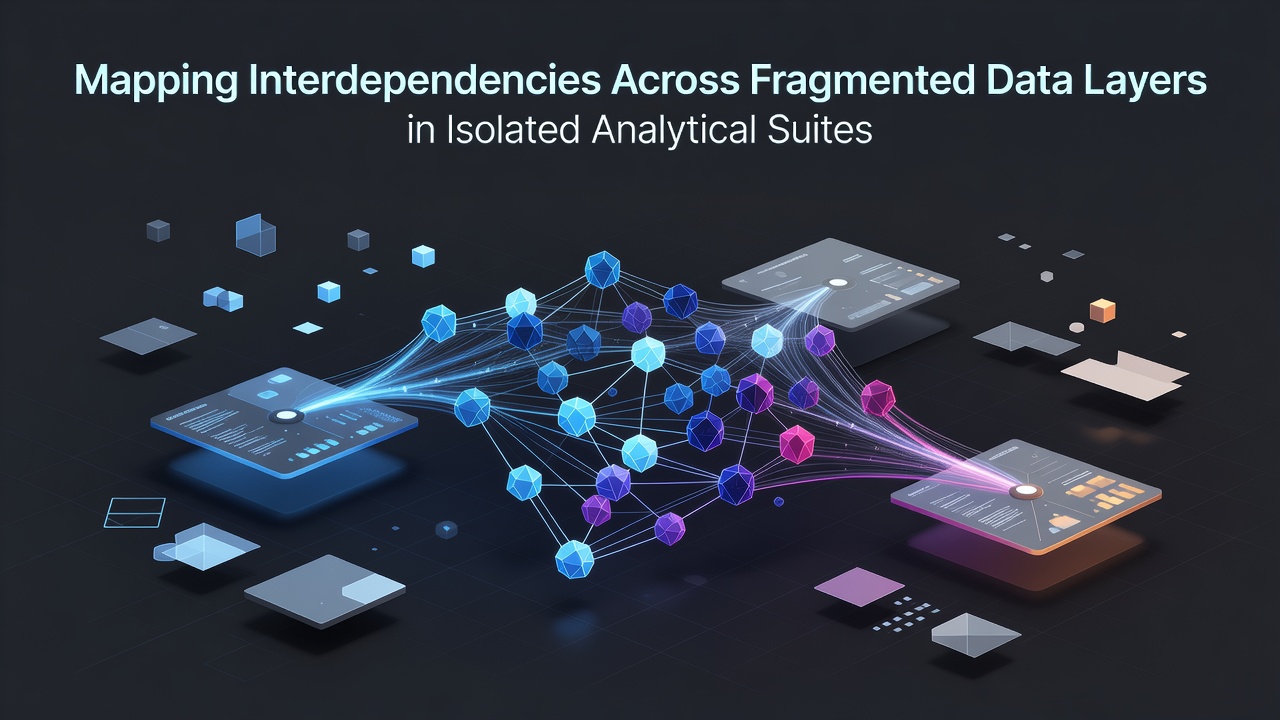
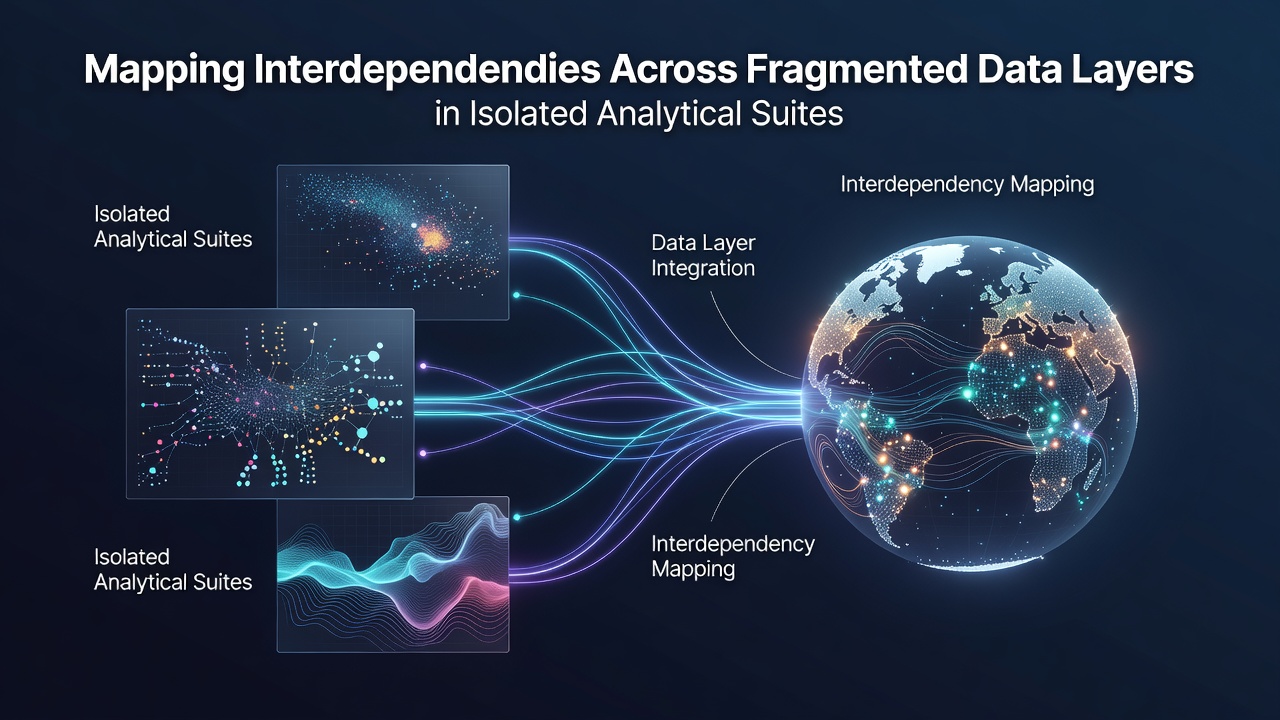
Organizations across industries face growing challenges when data remains scattered in separate analytical tools that do not communicate directly with one another, and mapping the connections between these layers has become a core requirement for accurate reporting and system reliability. Isolated analytical suites often store overlapping information in different formats, which creates hidden dependencies that surface only during integration attempts or compliance audits. Researchers note that without systematic mapping, teams encounter repeated errors when updates in one suite alter downstream calculations in another. Data fragmentation typically arises because departments adopt specialized platforms for their specific needs, such as marketing analytics, financial modeling, or supply chain forecasting, and these platforms evolve independently over time. Each suite maintains its own data schema, update cadence, and validation rules, so interdependencies form through manual exports, shared identifiers, or scheduled synchronization scripts. Observers point out that these links stay undocumented until a change in one layer breaks reports elsewhere, prompting the need for explicit dependency mapping. Mapping processes begin with inventory exercises that catalog every data element, its source suite, transformation steps, and destination outputs. Analysts use metadata extraction tools to trace field origins, then build directed graphs that show which layers rely on others for input values. Studies indicate that graph-based representations help teams visualize cascading effects when a source field changes format or frequency. In practice, teams assign unique identifiers to each dependency edge so that impact analysis can run automatically after any schema update.Techniques for Identifying Hidden Connections
One common approach involves querying access logs and ETL job histories to reconstruct data flows that cross suite boundaries, and this method reveals indirect dependencies that manual documentation often misses. Automated scanners can parse SQL statements, API calls, and file transfer records to flag relationships, after which domain experts validate the accuracy of each detected link. Data from industry reports shows that organizations completing such scans every quarter reduce integration failures by measurable margins compared with those that perform the exercise only during major upgrades.
Another technique relies on lineage tracking features built into modern data platforms, which record how records move from ingestion through transformation and into reporting layers even when the source and target suites differ. When these features operate across multiple vendors, they require standardized metadata formats such as those promoted by the Object Management Group. Teams that adopt consistent lineage standards find they can query dependency paths across previously isolated environments without custom scripting for each pair of tools.
October 2026 Developments in Cross-Suite Mapping
By October 2026 several vendors had released updated connectors that support real-time dependency monitoring between legacy on-premise suites and newer cloud analytics environments, and early adopters reported shorter resolution times for data quality incidents. Government agencies in multiple regions began requiring documented data lineage for regulatory submissions, which increased demand for mapping solutions that span fragmented toolsets. Figures from the European Data Protection Board indicate that organizations with comprehensive interdependency maps responded faster to subject access requests involving combined datasets.
Implementation Patterns Observed in Enterprise Settings
Enterprises often start with pilot mappings focused on high-risk data flows, such as revenue figures that feed both financial reporting and forecasting models housed in separate suites. Once the pilot succeeds, the scope expands to include secondary dependencies like customer identifiers shared across marketing and support platforms. Those who have studied these rollouts note that phased approaches limit disruption while building institutional knowledge about each suite's internal structures.
Training programs play a supporting role because analysts must understand both the technical mapping tools and the business context behind each data element. Workshops organized by professional associations have covered topics such as reconciling conflicting definitions of the same metric across suites, and participants receive templates for documenting assumptions that affect dependency accuracy. Research from academic centers shows that teams with cross-functional training produce maps that remain usable longer than those created solely by technical staff.
Challenges and Mitigation Strategies
Version control becomes difficult when multiple teams update mapping documents independently, so organizations establish central repositories with change tracking and review workflows. Access restrictions prevent unauthorized edits while still allowing contributors from different departments to propose updates. Observers note that governance committees meeting monthly can resolve conflicts over which suite owns a particular data definition before those conflicts affect downstream systems.
Performance overhead arises when continuous monitoring queries run against production suites, therefore many teams schedule intensive scans during maintenance windows and rely on lighter event-driven checks for daily operations. Resource allocation improves when mapping software integrates with existing monitoring dashboards, allowing teams to correlate dependency health with overall system performance metrics.
Conclusion
Mapping interdependencies across fragmented data layers continues to evolve as analytical suites diversify and regulatory expectations tighten, and organizations that maintain living dependency maps gain clearer visibility into how changes propagate through their environments. Continued development of cross-platform standards and monitoring tools supports more reliable integration between previously isolated systems, while structured governance ensures the maps remain current and actionable.