Katja Günther · 14 October 2026
Navigating Adaptive Query Optimization Challenges Within Specialized Data Platforms for Enhanced Operational Resilience
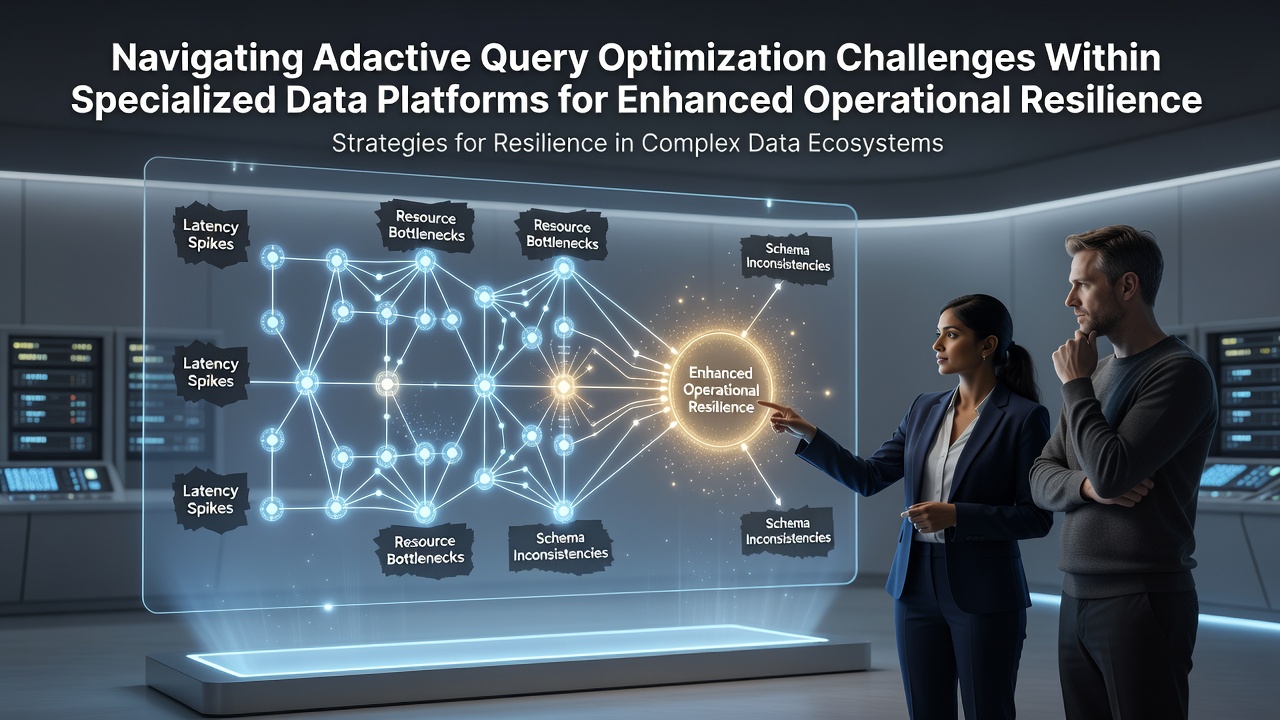
Specialized data platforms rely on adaptive query optimization to adjust execution plans in real time as data volumes and query patterns shift, and this process directly influences operational resilience across enterprise environments. Researchers have documented how these systems detect changes in statistics, resource availability, and workload characteristics before rewriting execution strategies on the fly, yet implementation often encounters hurdles when platforms integrate legacy storage layers with modern distributed architectures.
Core Mechanics of Adaptive Query Optimization
Adaptive query optimization operates through feedback loops that monitor runtime metrics such as cardinality estimates, join order costs, and I/O patterns, then applies corrections without requiring full query restarts. Data indicates that platforms using these techniques reduce average latency by 15 to 30 percent in high-volume analytical workloads according to benchmarks published by the National Institute of Standards and Technology. Observers note that the approach differs from static optimizers because it incorporates live statistics gathered during query execution rather than relying solely on precomputed histograms.
Engineers implement the mechanism through multiple stages including plan exploration, cost model recalibration, and selective plan switching at operator boundaries. Those who manage large-scale deployments report that the technology proves most effective when combined with machine learning models trained on historical execution traces, although integration complexity rises sharply in environments handling mixed transactional and analytical traffic.
Key Challenges in Specialized Platforms
Specialized platforms such as those designed for time-series analytics or geospatial processing introduce constraints that complicate adaptive adjustments. Limited memory buffers and fixed partitioning schemes often prevent the optimizer from exploring alternative execution paths, which leads to suboptimal plan selection when sudden data ingestion spikes occur. Studies from academic institutions in the European Union have shown that these limitations become pronounced during concurrent access by hundreds of users, where lock contention and resource fragmentation degrade the effectiveness of runtime adaptations.
Another persistent issue involves stale metadata in hybrid cloud deployments, where synchronization delays between on-premises clusters and remote object stores cause inaccurate cost estimations. Platform operators frequently encounter situations in which the adaptive layer selects a broadcast join over a more efficient shuffle join because network latency statistics have not propagated in time, resulting in increased CPU utilization and longer recovery windows after node failures.
Strategies for Effective Navigation
Teams address these obstacles by deploying layered monitoring that captures both query-level and infrastructure-level telemetry, then feeds the combined dataset into calibration routines that run at fixed intervals. Evidence suggests that organizations adopting this method achieve higher resilience scores during stress tests conducted in October 2026, when new regulatory guidelines on data availability took effect across multiple jurisdictions. Configuration tuning includes setting conservative thresholds for plan switching to avoid thrashing, while also maintaining fallback mechanisms that revert to baseline plans when adaptation overhead exceeds defined limits.
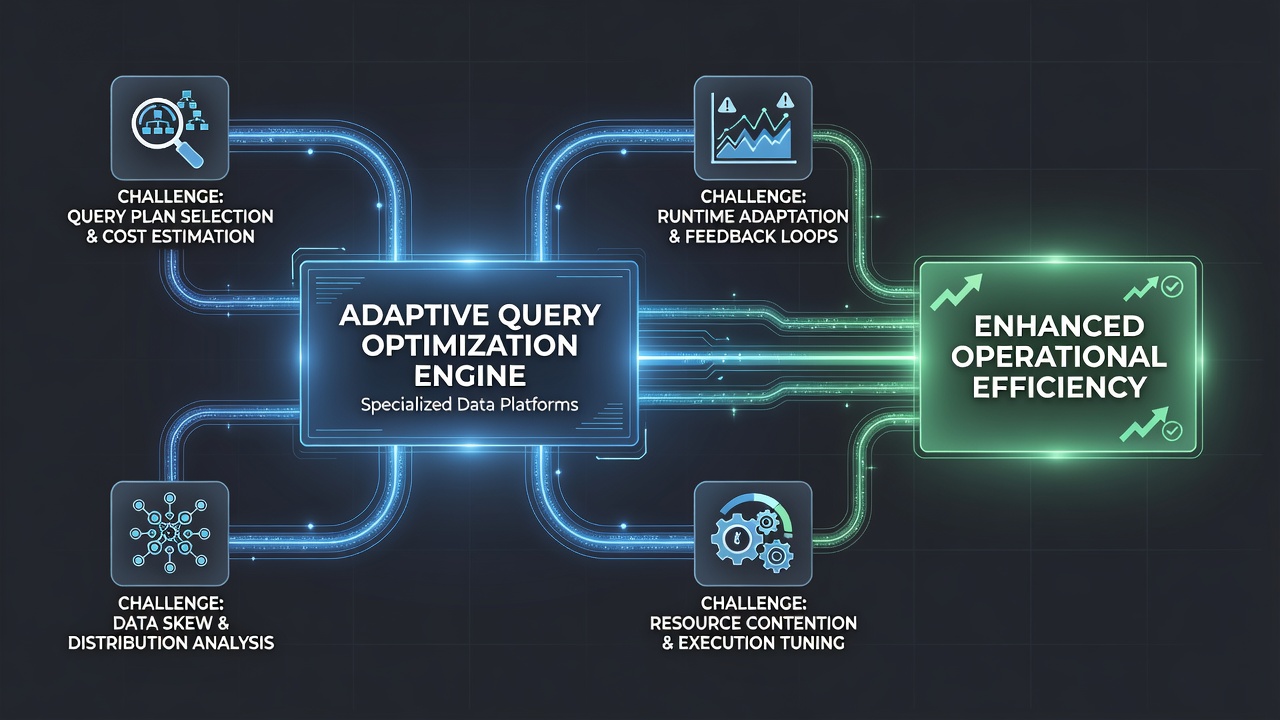
Integration with container orchestration platforms allows dynamic allocation of additional compute resources to query coordinator nodes during detected anomalies, which shortens the window between anomaly identification and corrective action. Industry reports from research consortia in Australia highlight cases where such orchestration reduced mean time to recovery by nearly 40 percent compared with static resource pools. Administrators also implement schema evolution protocols that propagate statistics updates more rapidly across distributed metadata stores, thereby decreasing the incidence of outdated cardinality estimates.
Impact on Operational Resilience Metrics
Operational resilience improves when adaptive query optimization successfully mitigates the effects of hardware degradation or network partitions, because the system can reroute work to healthy nodes without manual intervention. Figures from Canadian government technology assessments reveal that platforms equipped with mature adaptive capabilities maintain service-level objectives during simulated failure scenarios at rates 25 percent higher than those using non-adaptive alternatives. The connection arises because faster plan correction reduces queue buildup and prevents cascading delays that would otherwise extend outage durations.
Yet the benefits depend on careful governance of the optimization parameters, since overly aggressive adaptation can introduce variability that complicates capacity planning. Organizations therefore establish review cycles in which performance engineers analyze adaptation logs to identify patterns that warrant parameter adjustments or additional indexing strategies.
Conclusion
Navigating adaptive query optimization challenges requires coordinated attention to monitoring infrastructure, configuration discipline, and cross-layer coordination between query engines and underlying storage systems. Data platforms that incorporate these practices demonstrate measurable gains in recovery speed and workload stability, particularly as data environments continue to diversify through October 2026 and beyond. Continued refinement of feedback mechanisms and metadata freshness protocols remains central to sustaining those gains across specialized deployments.